
Rental guide
Storage in Anchorage
Climate-controlled vs. drive-up units, peer-to-peer storage, access hours and security.

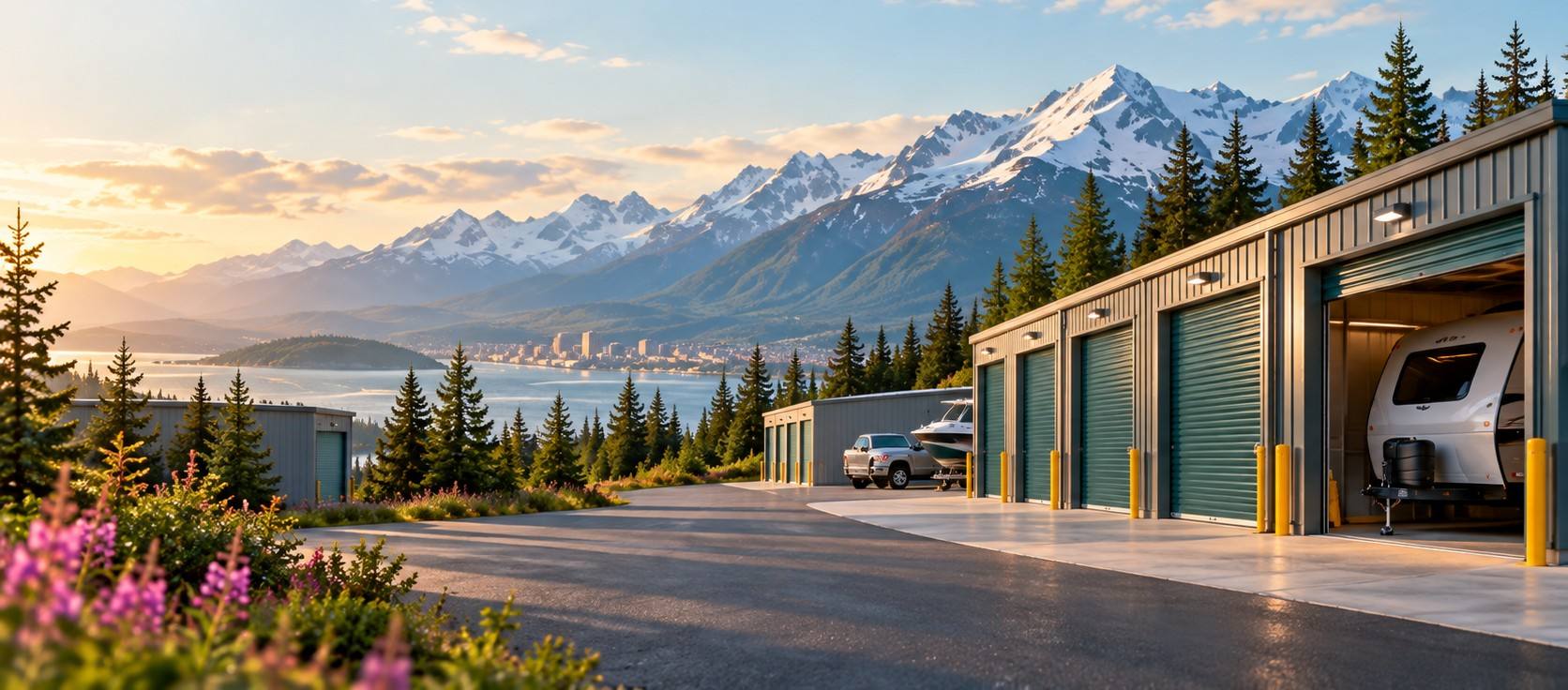
Alaska's summer is short, so RVs, boats and seasonal cars spend most of the year parked. Choose storage that protects against snow, ice and deep cold.
Indoor heated space protects batteries and fluids from deep freezes. Covered spaces block snow and summer UV. Open lots cost least but leave the vehicle exposed.
Heavy snow can damage RV roofs and boat covers if it isn't cleared. Ask who handles snow, and how often.
Leaving for the winter or on deployment? Look for automatic billing and storage that needs no in-person maintenance while you're away.
Indoor heated storage is the premium tier: vehicles sit in climate-controlled buildings with no snow to clear, and batteries and fluids are protected from deep freezes. Expect the highest monthly rates and high demand.
Covered outdoor storage puts vehicles under a rigid canopy. It keeps heavy winter snow and summer UV off at a lower price than indoor space.
Uncovered outdoor lots — fenced gravel or paved lots — are the most affordable and most widely available option, but the vehicle is exposed to everything Anchorage winter brings.
Service members deploying from Joint Base Elmendorf-Richardson and residents who leave for winter need storage that runs without them: automatic billing, clear access rules and no requirement to visit. Confirm those details before you go.
Storing household goods too? See storage. Moving to town? Read moving to Anchorage.
| Type | Protection | Cost | Best for |
|---|---|---|---|
| Indoor heated | Highest — no snow; protects battery and fluids | Highest | Classic cars and RVs you want fully protected |
| Covered outdoor | Keeps snow and UV off | Middle | RVs and boats on a budget |
| Uncovered outdoor lot | Fenced but exposed | Lowest | Trailers and sturdy vehicles with winter prep |
Local details that change what you should rent.
Unpaved lots can turn muddy and rutted when the ground thaws in spring. Ask about the surface and access in April and May.
Joint Base Elmendorf-Richardson and seasonal work bring steady demand for long-term storage. Reserve early for fall.
Indoor heated storage protects the most. Covered storage is a good middle ground. On an open lot, keep snow off the roof, use a breathable cover and maintain the batteries.
Deep cold can ruin an unmaintained battery. In unheated storage, remove it and keep it on a maintainer indoors, or use a maintainer (such as a solar trickle charger) on the vehicle.
Most facilities ask for current registration and proof of insurance. Confirm what yours needs before move-in.
Rental guide
Climate-controlled vs. drive-up units, peer-to-peer storage, access hours and security.
Guide
Shipping, temporary housing, storage, rental cars, winter prep and a move checklist.
Guide
Choosing a rig, real costs, road restrictions, campgrounds and bear safety.
Tell us how you're traveling and we'll point you to the right rentals — for a weekend in Anchorage or a month on the road.