

Rental guide
Vehicle storage in Anchorage
Indoor, covered and outdoor storage for cars, RVs and boats — plus winter prep.
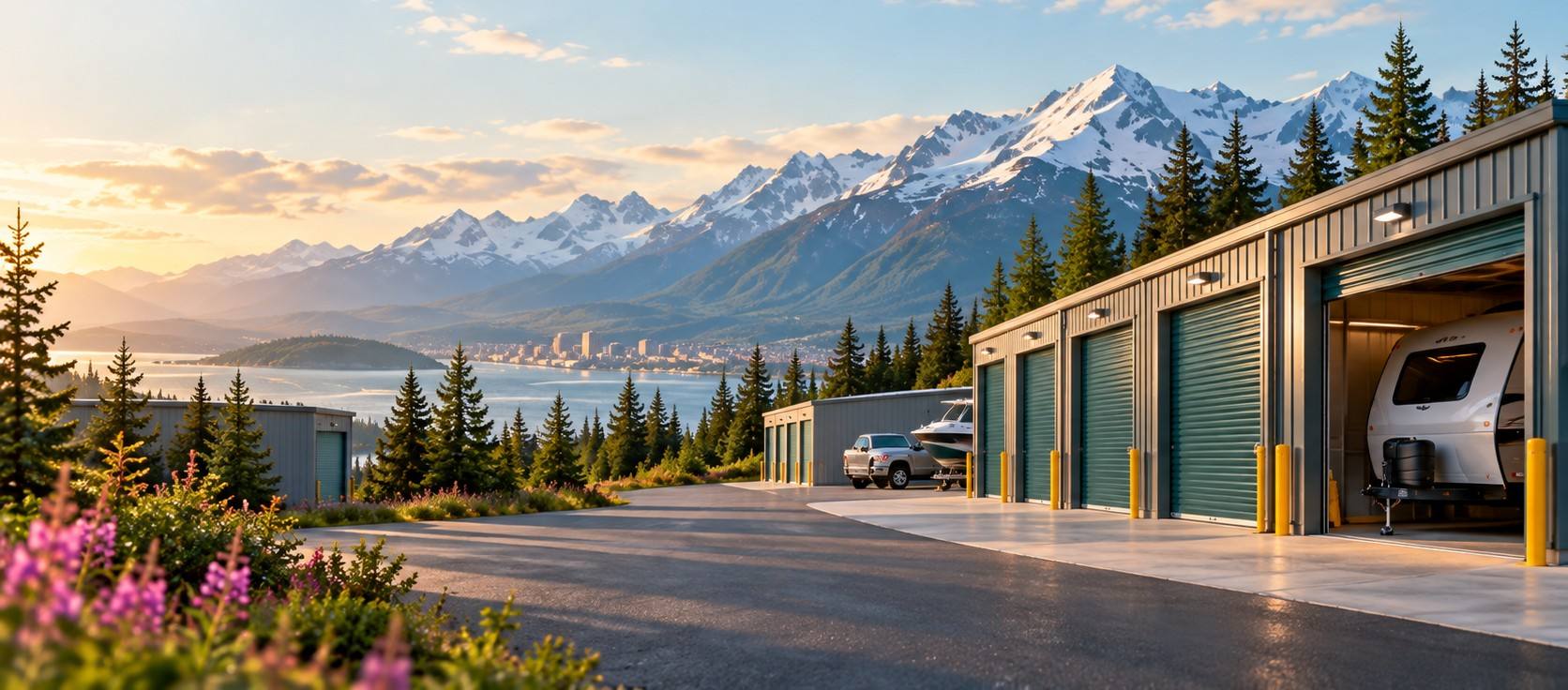
Anchorage storage has to survive subzero winters and a wet spring thaw. Decide what needs protecting from the cold, then compare units.
Interior climate-controlled units stay above freezing through winter, protecting against cold damage and condensation. Unheated units follow the outdoor temperature.
Commercial facilities offer standard unit sizes, gated access and on-site management. Peer-to-peer platforms rent space in locals' garages, basements and sheds, sometimes for less.
Look for gated PIN entry, video surveillance and on-site staff. Confirm whether access is 24/7 or limited to set hours.
Standard drive-up units are uninsulated and track the outdoor temperature. They’re convenient and fine for rugged items — yard equipment, tools, heavy plastic bins.
For sensitive items — electronics, wood furniture, artwork and important documents — a climate-controlled unit is strongly recommended. These interior units stay above freezing through winter, preventing cold damage and the condensation that follows temperature swings.
Commercial self-storage facilities offer standard unit sizes (5×5, 10×10, 10×20 and so on), security systems and on-site management. They’re mostly in the city’s commercial and industrial corridors.
Peer-to-peer storage platforms connect you with Anchorage residents renting space in heated garages, basements or sheds. They can be cheaper and closer to where you live, but access, security and insurance depend on the host — read the terms.
Security varies widely. Look for perimeter fencing, gated entry with individual codes, cameras and on-site staff. Just as important: confirm access hours before you sign. Some facilities offer 24/7 entry; others close in the evening — frustrating in winter, when daylight is scarce.
Storing a car, RV or boat? See vehicle storage. Relocating? Start with moving to Anchorage.
| Option | Good for | Watch out for |
|---|---|---|
| Climate-controlled unit | Electronics, furniture, documents, artwork | Higher monthly cost |
| Drive-up unheated unit | Tools, bins, yard and outdoor gear | Freezing temperatures and spring moisture |
| Peer-to-peer space | Flexible or neighborhood storage | Access terms and insurance vary by host |
Local details that change what you should rent.
When snow melts in spring, moisture and minor ground flooding are common. Put items in unheated units up on pallets.
In December, Anchorage gets only about five and a half hours of daylight. Units with well-lit, long or 24/7 access are much easier to use.
Relocations and military moves drive steady demand. Reserve ahead for summer move dates.
For anything sensitive to cold or condensation — electronics, wood furniture, artwork, instruments, documents — it's strongly recommended. Sturdy items like tools and plastic bins are usually fine in a standard drive-up unit.
Many are, which suits temporary moving storage. Confirm the minimum term, move-out notice and any fees when you sign.
Many facilities require it. Check whether your homeowners or renters policy covers goods stored off-site before buying the facility's plan.
Rental guide
Indoor, covered and outdoor storage for cars, RVs and boats — plus winter prep.
Guide
Shipping, temporary housing, storage, rental cars, winter prep and a move checklist.

Tell us how you're traveling and we'll point you to the right rentals — for a weekend in Anchorage or a month on the road.